Introduction: The Timeless Allure of Ancient Stone Art
From the earliest days of human existence, when our ancestors etched primitive symbols into cave walls, the urge to create has been an intrinsic part of what it means to be human. As civilizations evolved, so too did artistic expression—from simple rock engravings to elaborate sculptures and reliefs that adorned temples, palaces, and sacred sites. Unlike paintings or textiles, which are often fragile and susceptible to decay, stone carvings and reliefs possess a remarkable durability. Carved into hard materials like sandstone, granite, and limestone, they have survived for thousands of years, offering us a direct window into the past.
Relief carvings, in particular, hold a unique place in ancient art. Unlike freestanding sculptures, reliefs are attached to a background surface, with figures carved in varying degrees of depth—from low relief (bas-relief), where figures are slightly raised from the surface, to high relief (alto-relievo), where forms project dramatically. This technique allowed artisans to tell complex stories across large surfaces, turning walls and cliffs into sprawling canvases for myth, history, and religion. Many of these works were created for religious or ceremonial purposes, serving as offerings to gods, memorials to rulers, or guides for the faithful. Others celebrated military victories, royal processions, or everyday life, providing invaluable insights into the social, political, and cultural dynamics of ancient societies.
Today, these ancient carvings stand as more than just artistic achievements; they are tangible links to our shared heritage. They remind us that despite the passage of time, the human desire to create, to worship, and to tell stories remains unchanged. Whether you’re standing before a colossal Buddha carved into a cliff or examining intricate reliefs of mythological scenes in a temple, these works have the power to transcend time, connecting us to the people who crafted them so long ago.
Arsameia Mount Nemrut, Turkey: The Oldest Handshake in History
Nestled in the rugged terrain of Mount Nemrut in southeastern Turkey, the ancient site of Arsameia is home to one of the most intriguing and historically significant relief carvings in the world. Dating back to between 70 B.C. and 38 B.C., this masterpiece is believed to be the oldest known depiction of two figures clasping hands—a simple yet powerful gesture that resonates across millennia. The eleven-foot-tall (approximately 3.35 meters) relief portrays King Mithridates I of Commagene, father of Antiochus I, dressed in elaborate regal attire, shaking hands with the Greek hero Hercules.
The Commagene Kingdom, a small but influential state that existed during the Hellenistic period, was known for its unique blend of Greek, Persian, and local cultures—a fusion that is vividly reflected in this carving. Mithridates I, a ruler who sought to legitimize his reign and forge alliances, likely commissioned the relief to symbolize the unity between his kingdom and the broader Hellenistic world, as well as to invoke the protection of Hercules, a figure revered across both Greek and Persian traditions. The attention to detail in the carving is remarkable: Mithridates’ royal robes are adorned with intricate patterns, while Hercules’ muscular frame and lion-skin cloak are rendered with striking realism.
What makes this relief even more extraordinary is its context. Arsameia was a sacred site and a royal residence, and the handshake relief was part of a larger complex of monuments, including statues, stelae, and tombs. For centuries, the site lay forgotten, buried under layers of earth and vegetation, until it was rediscovered in the 19th century. Today, visitors to Arsameia can climb the slopes of Mount Nemrut to stand before this ancient handshake, marveling at the skill of Commagenean artisans and the timeless message of friendship and alliance it conveys. It is a powerful reminder that even in the distant past, human connections and diplomatic gestures were celebrated through art.
Dazu Rock Carvings, China: A Tapestry of Religion and Culture
In the heart of China’s Sichuan Basin, the Dazu Rock Carvings stand as a testament to the country’s rich artistic and religious heritage. Carved between the ninth and thirteenth centuries A.D., during the late Tang, Five Dynasties, and Song dynasties, these elaborate sculptures and reliefs are celebrated as the pinnacle of Chinese rock art, renowned for their exceptional craftsmanship, diverse themes, and remarkable state of preservation. Unlike many other ancient carving sites, which often feature large, imposing figures, the Dazu Carvings range from tiny, intricate details to monumental sculptures, covering an area of over 200 square kilometers and encompassing more than fifty thousand statues and one hundred thousand inscriptions.
What sets the Dazu Rock Carvings apart is their harmonious blend of Buddhism, Taoism, and Confucianism—three of China’s major philosophical and religious traditions. This syncretism is evident in the themes of the carvings, which depict scenes from Buddhist sutras, Taoist immortals, and Confucian virtues, as well as everyday life in ancient China. One of the most famous sections is the Baodingshan Grottoes, where a series of reliefs illustrate the “Ten Kings of Hell,” depicting the consequences of good and evil deeds in vivid detail. Another highlight is the Beishan Grottoes, known for their delicate carvings of Guanyin, the Buddhist goddess of compassion, with each statue featuring unique expressions and poses.
The preservation of the Dazu Carvings is nothing short of remarkable. Thanks to their location in a subtropical climate with moderate rainfall and the careful maintenance of the site over the centuries, the carvings have retained much of their original color and detail. Visitors can explore the site via well-kept pathways and trails, which wind through lush greenery and offer stunning views of the sculptures bathed in sunlight. Whether you’re interested in religion, philosophy, art, or history, the Dazu Rock Carvings offer a fascinating glimpse into the cultural and spiritual life of ancient China, showcasing the skill of its artisans and the depth of its religious traditions.
Elephanta Caves, Gharapuri Island, India: The Three Faces of Shiva
Off the coast of Mumbai, on Gharapuri Island (commonly known as Elephanta Island), lies one of India’s most iconic ancient sites: the Elephanta Caves. Carved out of solid basalt rock in the fifth century A.D., during the reign of the Rashtrakuta dynasty, these cave temples are renowned as one of India’s seven wonders and a UNESCO World Heritage site. The caves are famous for their breathtaking carvings and statues, which showcase the pinnacle of Indian artistry and devotion to Hinduism.
The centerpiece of the Elephanta Caves is the Trimurti—a twenty-foot-tall (approximately 6.1 meters) relief carving located at the rear of the main cave. This masterpiece depicts the three-faced Shiva, representing his threefold nature: creation (Brahma), preservation (Vishnu), and destruction (Shiva himself). Each face is rendered with exquisite detail: the left face, representing Brahma, is calm and serene; the central face, Vishnu, radiates compassion; and the right face, Shiva, displays a fierce yet benevolent expression. The Trimurti is widely regarded as one of the greatest examples of Indian rock-cut art, embodying the spiritual and artistic ideals of the time.
In addition to the Trimurti, the Elephanta Caves feature numerous other intricate reliefs depicting scenes from Hindu mythology, including Shiva as Nataraja (the lord of dance), Shiva slaying the demon Andhaka, and the wedding of Shiva and Parvati. These carvings cover the walls and pillars of the caves, creating a immersive and sacred atmosphere. To reach the caves, visitors must take a ferry from Mumbai to Gharapuri Island, then climb a flight of 120 steps up the mountain to the cave entrance. The journey is well worth the effort, as the caves offer a peaceful retreat from the hustle and bustle of the city and a chance to marvel at the skill of ancient Indian artisans. Whether you’re a devout Hindu or simply an admirer of art and history, the Elephanta Caves are a must-visit destination that will leave you in awe of India’s rich cultural heritage.
Kom el Shoqafa, Alexandria, Egypt: A Fusion of Civilizations
Alexandria, Egypt—once a thriving center of learning and culture in the ancient world—is home to one of the most fascinating archaeological sites in the Mediterranean: Kom el Shoqafa, or the “Mound of Shards.” This underground necropolis, dating back to the second century A.D., is a remarkable fusion of Greek, Roman, and Egyptian architectural and artistic styles, reflecting the diverse cultural influences that shaped Alexandria during the Ptolemaic and Roman periods. Used as a burial site until the fourth century A.D., the catacombs were lost to history for over a thousand years, rediscovered only in 1900 when a donkey fell into a crevice leading to the underground chambers.
The highlight of Kom el Shoqafa is its exquisite reliefs and carvings, which adorn the temple entrance, the main tomb, and the surrounding chambers. These works of art blend Egyptian religious symbolism with Greek and Roman artistic techniques, creating a unique and captivating style. At the entrance, visitors are greeted by reliefs depicting Egyptian deities such as Anubis (the god of the dead) and Osiris (the god of the afterlife), rendered in the traditional Egyptian style with rigid poses and symbolic attributes. Inside the main tomb, however, the Greek influence is clearly evident: a relief features Athena’s shield, emblazoned with the head of Medusa—a iconic Greek motif—while the figures are carved in a more naturalistic, Hellenistic style.
The catacombs also contain a series of statues and sarcophagi, many of which are decorated with intricate carvings of mythological scenes and funerary rituals. One of the most notable features is the “Hall of Caracalla,” named after the Roman emperor who visited Alexandria in 215 A.D., which contains a large statue of the emperor and reliefs depicting his triumphs. What makes Kom el Shoqafa so unique is its ability to seamlessly blend three distinct civilizations into a single artistic masterpiece. It is a testament to the cultural exchange and tolerance that defined Alexandria during its golden age, and a reminder of the interconnectedness of ancient civilizations. For visitors to Egypt, Kom el Shoqafa offers a rare opportunity to explore a site that bridges the gap between East and West, and to marvel at the creativity and ingenuity of ancient artisans.
Angkor Wat, Cambodia: The World’s Largest Religious Monument
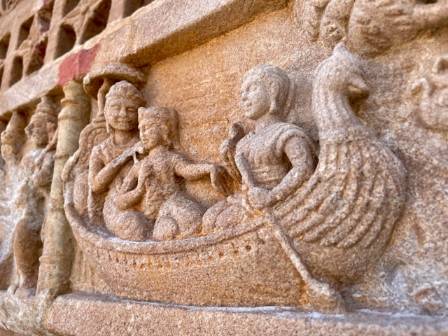
In the jungles of Siem Reap, Cambodia, stands Angkor Wat—the world’s largest religious monument and one of the most breathtaking examples of ancient architecture and art. Built in the twelfth century A.D. during the reign of King Suryavarman II of the Khmer Empire, Angkor Wat was originally dedicated to the Hindu god Vishnu, later converted to a Buddhist temple, and today stands as a UNESCO World Heritage site and a symbol of Cambodia’s national identity. Each year, over a million visitors flock to Angkor Wat to marvel at its vast scale, intricate design, and exquisite reliefs.
What sets Angkor Wat apart from other ancient sites is the sheer detail and scope of its relief carvings. Nearly every surface of the temple—from the pillars and lintels to the walls and roofs—was meticulously carved by hundreds of artisans over decades. The reliefs span miles in length, depicting scenes from ancient Hindu epics such as the Ramayana and the Mahabharata, as well as historical events from the Khmer Empire, including royal processions, battles, and religious ceremonies. One of the most famous sections is the “Gallery of Kings,” which features reliefs of Khmer rulers and their families, while another highlight is the “Churning of the Ocean of Milk,” a massive relief depicting the mythological story of the gods and demons churning the ocean to obtain the nectar of immortality.
In addition to the narrative reliefs, Angkor Wat is adorned with thousands of devatas—minor female deities—each carved with unique facial expressions, hairstyles, and clothing. These devatas, which number in the thousands, are a testament to the skill and patience of the Khmer artisans, who spent countless hours perfecting each detail. The temple’s architecture is equally impressive, with its towering spires, intricate gopurams (gateways), and symmetrical layout reflecting the Khmer belief in the cosmos. As the sun rises over the spires of Angkor Wat, casting a golden glow over the carvings, visitors are transported to a world of ancient myths and royal grandeur. It is a site that inspires wonder, reverence, and a deep appreciation for the creativity and vision of the Khmer Empire.
Apadana Palace, Persepolis, Iran: The Splendor of the Persian Empire
In the southwestern region of Iran, near the city of Shiraz, lies Persepolis—once the capital of the Achaemenid Persian Empire and one of the most magnificent cities of the ancient world. At the heart of Persepolis stands the Apadana Palace, a grand royal residence constructed by Darius the Great around 515 B.C. and completed by his son Xerxes. Though much of the palace was destroyed by Alexander the Great in 330 B.C., its ruins still stand as a testament to the splendor and power of the Persian Empire, with its staircases, columns, and reliefs offering a glimpse into the empire’s golden age.
The Apadana Palace is famous for its elaborate relief carvings, which adorn the grand staircases leading to the palace entrance. These reliefs depict processions of envoys, soldiers, guards, and chariots bearing gifts and tributes for the Persian king, representing the diverse peoples and nations that made up the Achaemenid Empire. From the Lydians of Anatolia to the Indians of the Indus Valley, each group is depicted in their traditional clothing and carrying their unique offerings, showcasing the empire’s vast reach and cultural diversity. The carvings are rendered with remarkable precision and attention to detail, with each figure’s facial expressions, gestures, and attire reflecting their cultural identity.
Another notable feature of the Apadana Palace is the carvings of the Immortals—the elite royal guard of the Persian kings, famously depicted in the film 300. These soldiers, who numbered ten thousand and were known for their bravery and loyalty, are shown standing in rows, their spears and shields carved with intricate designs. The palace’s roof was once supported by towering columns—thirteen of which still stood as late as the twentieth century—each adorned with elaborate capitals featuring bull or lion heads, symbols of royal power and strength. Today, visitors to Persepolis can walk along the ancient staircases, marvel at the reliefs, and imagine the grandeur of the Persian Empire at its height. The Apadana Palace is a UNESCO World Heritage site and a must-visit destination for anyone interested in ancient history, architecture, and art.
Toranas, Sanchi, India: Buddhist Stories in Stone
In the central Indian state of Madhya Pradesh, the small village of Sanchi is home to one of the oldest and most important Buddhist sites in the world. Sanchi is renowned for its stupas—dome-shaped Buddhist monuments built to enshrine relics of the Buddha or his disciples—and among these, the “Great Stupa” (Sanchi Stupa No. 1) stands out as the most prominent. Built in the third century B.C. during the reign of Emperor Ashoka, a devout Buddhist who played a key role in spreading Buddhism across India and beyond, the Great Stupa is surrounded by four Toranas—ornate stone gateways that are among the finest examples of ancient Indian relief carvings.
The Toranas of Sanchi are masterpieces of Buddhist art, each intricately carved with scenes from the life of the Buddha, as well as mythological figures and symbols. Measuring over thirty feet tall (approximately 9 meters), each Torana consists of two vertical pillars and three horizontal crossbars (architraves), all adorned with detailed carvings. The scenes depicted include the Buddha’s birth, his enlightenment under the Bodhi tree, his first sermon at Sarnath, and his death (parinirvana), as well as stories from his previous lives (jatakas). One of the most famous carvings on the Toranas is that of a Yakshini—a female nature spirit—supporting a trestle architrave, her figure curved in a graceful pose, her hair and clothing rendered with intricate detail.
What makes the Toranas so remarkable is their ability to tell complex stories through visual art, using a combination of relief carving and symbolism. The carvings are executed with a high degree of skill, with the artisans using chisels and hammers to create depth and texture, bringing the scenes to life. The Toranas also reflect the syncretic nature of early Buddhism, incorporating elements from Hinduism and other local traditions. Today, Sanchi is a UNESCO World Heritage site, and the Toranas continue to inspire visitors with their beauty and spiritual significance. Whether you’re a Buddhist pilgrim or a history buff, the Toranas of Sanchi offer a profound insight into the teachings and art of early Buddhism, and a chance to connect with one of the world’s oldest religious traditions.
Leshan Giant Buddha, China: A Colossus of Calm
In the Sichuan province of China, overlooking the confluence of the Minjiang, Dadu, and Qingyi rivers, stands the Leshan Giant Buddha—the world’s largest stone Buddha statue and a UNESCO World Heritage site. Carved into a cliff face between A.D. 713 and 803 during the Tang dynasty, this colossal statue is a marvel of engineering and devotion, standing at a height of 233 feet (approximately 71 meters)—roughly the same height as a twenty-story building. The statue was initiated by a Buddhist monk named Haitong, who sought to calm the turbulent waters of the rivers, which were notorious for capsizing boats and claiming lives. According to legend, the stone removed during the statue’s construction altered the flow of the rivers, making them safer for ships—a testament to the monk’s vision and the ingenuity of the artisans who brought it to life.
The Leshan Giant Buddha depicts Maitreya, the future Buddha, sitting in a meditative pose with his hands resting on his knees. The statue’s facial expression is calm and serene, with eyes that gaze out over the rivers, radiating compassion and peace. What is particularly impressive about the Leshan Giant Buddha is its advanced drainage system, which was designed to protect the statue from water damage. The system includes hidden channels and gutters carved into the statue’s hair, ears, and shoulders, which redirect rainwater away from the stone, preventing erosion. Remarkably, this drainage system is still functional today, after more than a thousand years, a testament to the skill and foresight of the Tang dynasty artisans.
Visitors to the Leshan Giant Buddha can approach the statue via a winding staircase carved into the cliff face, offering panoramic views of the rivers and the surrounding landscape. As you climb down the staircase, you’ll get a close-up view of the statue’s massive feet—each measuring over twenty-nine feet (approximately 8.8 meters) in length—and the intricate details of its clothing and facial features. The Leshan Giant Buddha is not only a masterpiece of ancient art but also a symbol of the harmonious relationship between humans and nature, and a reminder of the power of faith to inspire great works. It is a must-visit destination for anyone traveling to China, offering a unique combination of natural beauty, historical significance, and spiritual tranquility.
Taq-e Bostan, Iran: Sassanid Art Along the Silk Road
Nestled in the Zagros Mountains of western Iran, along the ancient Silk Road, lies Taq-e Bostan—a site renowned for its stunning rock carvings dating back to the Sassanid Dynasty (A.D. 226–650). The Sassanids, who ruled over the Persian Empire for over four centuries, were known for their love of art and architecture, and Taq-e Bostan is one of the finest examples of their artistic legacy. The site consists of two magnificent rock-cut arches (taqs) adorned with carvings of coronation ceremonies, hunting scenes, and Sassanid royal symbols, as well as a natural pool fed by a sacred spring, which reflects the carvings, creating a breathtaking visual effect.
The carvings at Taq-e Bostan are celebrated for their beauty, detail, and state of preservation. The larger of the two arches, known as Taq-e Bostan (the “Arch of Bostan”), features a series of reliefs depicting the coronation of Sassanid kings, including Ardashir II and Shapur III. The kings are shown receiving the crown of kingship from Ahura Mazda, the Zoroastrian god of wisdom and light, surrounded by attendants, soldiers, and mythological creatures. The smaller arch, Taq-e Kiyānīsh (the “Arch of the Kings”), features carvings of hunting scenes, with kings riding horses and hunting lions and wild boars—symbolizing their bravery, power, and connection to nature.
What makes Taq-e Bostan so unique is its location along the Silk Road, which made it a popular resting place for travelers, merchants, and pilgrims from across Asia and Europe. For over seventeen centuries, these carvings have been admired by countless visitors, their beauty enduring through wars, invasions, and the passage of time. The site’s natural pool, fed by a sacred spring, adds to its mystical atmosphere, with the reflections of the carvings in the water creating a sense of harmony between art and nature. Today, Taq-e Bostan is a UNESCO World Heritage site and a popular destination for tourists and history enthusiasts, offering a glimpse into the grandeur and artistic achievements of the Sassanid Dynasty.
Mahabalipuram, India: The Largest Open-Air Relief Carving
On the southeastern coast of India, in the state of Tamil Nadu, lies Mahabalipuram—an ancient port city and a UNESCO World Heritage site renowned for its stunning stone monuments and carvings. Built between the seventh and ninth centuries A.D. during the reign of the Pallava dynasty, Mahabalipuram is home to four major World Heritage sites, including the “Descent of the Ganges” (also known as “Arjuna’s Penance”)—the largest open-air relief carving in the world. This masterpiece, carved from a single block of granite, measures ninety-six feet (approximately 29 meters) in length and forty-three feet (approximately 13 meters) in height, making it one of the most impressive ancient artworks ever created.
The “Descent of the Ganges” is a complex and multi-layered artwork, with two equally compelling interpretations. According to one legend, the relief depicts Arjuna, a hero from the Mahabharata, performing penance to please Shiva and obtain the divine weapon Pashupatastra. According to another interpretation, the relief depicts the mythological story of the Ganges River descending from heaven to earth, with the gods, goddesses, and mythical creatures gathered to witness the event. The carving is filled with hundreds of figures, including humans, animals, and divine beings, all rendered with intricate detail. On the left side of the relief, either Arjuna or Shiva is depicted in a meditative pose, while on the right side, life-sized elephants are shown protecting their young beneath a host of other creatures, including monkeys, birds, and snakes.
What makes the “Descent of the Ganges” so remarkable is its scale and the fact that it was carved from a single rock. The Pallava artisans used chisels and hammers to remove over 20,000 tons of granite, creating a masterpiece that blends myth, religion, and nature. The relief is also notable for its use of perspective and depth, with figures carved in varying degrees of relief to create a sense of space and movement. Today, Mahabalipuram is a popular tourist destination, attracting visitors from around the world who come to marvel at the “Descent of the Ganges” and other ancient monuments, including rock-cut temples, monolithic shrines, and stone sculptures. It is a testament to the skill and creativity of the Pallava dynasty and a proud part of India’s cultural heritage.
Conclusion: Embark on Your Historical Journey with Mytour
In a world that often moves too fast, ancient reliefs and stone carvings offer a chance to slow down, reflect, and connect with the past. These masterpieces, crafted by skilled artisans thousands of years ago, are more than just works of art—they are windows to civilizations, telling stories of faith, power, creativity, and the human spirit. From the oldest handshake in history at Arsameia to the largest open-air relief at Mahabalipuram, each site on this list offers a unique and unforgettable experience, inviting you to explore the diversity and richness of human culture.