Publisering
Getting to Know the Black-Tailed Prairie Dog (Cynomys ludovicianus)
The black-tailed prairie dog (scientific name: Cynomys ludovicianus) is a small, charismatic rodent that plays a vital role in the prairie ecosystems of North America. Closely related to ground squirrels, this species is easily recognizable by its distinct physical traits and complex social behavior. From their bustling “towns” to their role as a keystone species for predators and other wildlife, black-tailed prairie dogs are far more than just cute burrowers, they are a cornerstone of the grassland habitats they call home. Below, we’ll explore every aspect of their lives, from their appearance and behavior to their habitat, distribution, and the challenges they face in the modern world.
Jonathan Bailey
Signatur
The black-tailed prairie dog (scientific name: Cynomys ludovicianus) is a small, charismatic rodent that plays a vital role in the prairie ecosystems of North America. Closely related to ground squirrels, this species is easily recognizable by its distinct physical traits and complex social behavior. From their bustling “towns” to their role as a keystone species for predators and other wildlife, black-tailed prairie dogs are far more than just cute burrowers, they are a cornerstone of the grassland habitats they call home. Below, we’ll explore every aspect of their lives, from their appearance and behavior to their habitat, distribution, and the challenges they face in the modern world.
Description
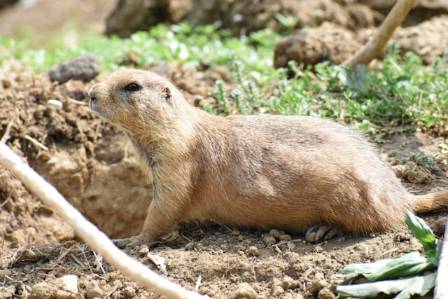
As a close relative of the ground squirrel, the black-tailed prairie dog is a stocky, heavy-bodied rodent most notable for its short, black-tipped tail—a feature that sets it apart from other prairie dog species. It has large, round eyes that help it detect predators from a distance, and its tail is relatively short compared to its body size. The prairie dog’s fur is a warm brownish-tan color, which blends seamlessly with the dry grasslands of its native habitat, providing a natural form of camouflage against both predators and the harsh prairie sun. This fur not only offers protection but also helps regulate body temperature, keeping the animal cool during hot days and insulated on cooler mornings.
Life History
Black-tailed prairie dogs are indispensable to the prairie ecosystem, acting as a critical link in the food chain and a provider of shelter for other species. They serve as a primary food source for a wide range of predators, including coyotes, badgers, golden eagles, and even the endangered black-footed ferret. Additionally, the abandoned burrows they leave behind become valuable homes for creatures like burrowing owls, Texas horned lizards, rabbits, hares, and even rattlesnakes—turning the prairie dog’s underground networks into a shared resource for the entire ecosystem.
Social Structure
These rodents are highly social animals, living in large, organized groups known as “prairie dog towns.” These towns can vary dramatically in size, ranging from just one acre to over 1,000 acres—large enough to support thousands of individuals. To manage such large communities, prairie dog towns are divided into smaller units called “wards,” which function similarly to counties within a state. Each ward is further split into tight-knit social groups known as “coteries.” A typical coterie consists of one adult male, one to four adult females, and their offspring under two years of age. Movement between different wards is rare, as coteries are territorial and maintain strong family bonds.
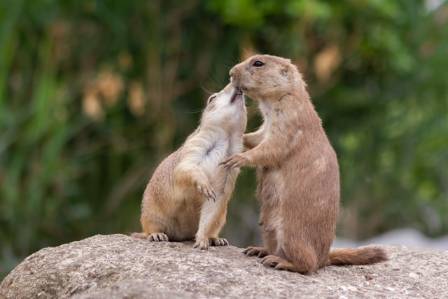
One of the most endearing social behaviors of prairie dogs is their unique greeting ritual: when family members meet, they bare their teeth and press their mouths together in a gesture that looks like a “kiss.” This behavior isn’t just a display of affection, it’s a way to recognize fellow coterie members, reinforcing social bonds and preventing conflicts with strangers.
Daily Habits
Black-tailed prairie dogs are strictly diurnal, meaning they are active only during the day. They are most busy during the cooler hours—early morning and late afternoon when the prairie heat is less intense. During these times, they engage in a range of social activities: visiting neighboring coterie members, grooming each other to maintain fur health and social connections, and foraging for food (primarily grasses and herbs).
Safety is a top priority for prairie dogs, and they have a sophisticated warning system to protect their community. When the group is out of their burrows, one individual acts as a “sentry,” perching on the raised, volcano-like mound of dirt that surrounds each burrow entrance. From this vantage point, the sentry keeps a sharp eye out for predators or other dangers. If a threat is spotted—whether it’s a coyote approaching or a human walking nearby, the sentry lets out a loud, high-pitched bark. Upon hearing this warning, every prairie dog in the area dives into the nearest burrow and waits until the sentry gives an “all clear” call before venturing back out.
Reproduction and Lifespan
Female black-tailed prairie dogs produce just one litter per year, usually in March or April. Each litter typically has four to five young, called “pups.” The gestation period lasts 34 to 35 days, and when the pups are born, they are blind, hairless, and completely dependent on their mothers. They stay hidden in the deep, safe chambers of the burrow for the first six weeks of their lives, growing and developing until they are strong enough to emerge into the world.
Shortly after the pups start venturing outside, the family begins to disperse. Young males usually leave their birth coterie before their first breeding season (around one year of age) to find new territories and start their own coteries. In contrast, female prairie dogs often stay in their original coterie for their entire lives, helping to raise future litters and maintain the social structure.
Lifespan varies by gender: female prairie dogs can live up to eight years in the wild, while males typically have shorter lives, rarely living more than five years. This difference is likely due to the risks males face when dispersing to new areas, such as predation and competition for territory.
Habitat
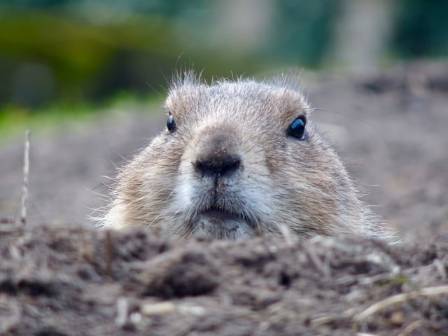
Black-tailed prairie dogs are native to the short-grass prairie habitats of western North America. These grasslands are characterized by low-growing grasses, minimal tree cover, and dry, well-drained soil—ideal conditions for digging their complex burrow systems. Prairie dogs avoid areas with heavy brush or tall grass because these habitats reduce visibility, making it harder for sentries to spot predators and putting the entire community at risk. The short-grass prairies also provide an abundant food source (grasses and herbs) and allow the prairie dogs to move quickly across the ground, both to forage and escape danger.
Distribution
Historically, black-tailed prairie dogs were widespread across the western North American plains, from southern Canada down to northern Mexico. In the state of Texas, they were once common in the western portions of the state and the Panhandle region. At their peak, some prairie dog towns were massive: one famous town in Texas covered 25,000 square miles and was home to an estimated 400 million prairie dogs—making it one of the largest animal colonies ever recorded.
Today, however, the story is very different. Due to habitat loss and human activity, less than one percent of the original prairie dog population and their habitat remains. While they are still locally common in some areas, their range has shrunk dramatically, and many once-thriving towns have disappeared entirely.
Other
For the past 50 years or more, black-tailed prairie dogs have been pushed out of their native habitats by ranching and farming activities. As farmers and ranchers converted prairie lands into croplands or grazing areas for livestock, the prairie dogs’ homes were destroyed, and their numbers plummeted. It’s true that large concentrations of prairie dogs can sometimes damage cultivated crops or compete with livestock for grass, but the idea that they should be completely eliminated from rangelands is increasingly questioned.
In fact, some ranchers in Texas have noticed unintended consequences of removing prairie dogs: the undesirable spread of brush. Without prairie dogs to graze on grasses and dig up soil, invasive brush species (like mesquite) have taken over many rangelands. This brush growth is harmful to the livestock industry, as it reduces the amount of usable grass for cattle and makes grazing areas less productive. In many cases, the damage caused by this brush spread far outweighs any harm prairie dogs might have done to crops or livestock.
This realization has led to a growing understanding of the prairie dog’s value: they aren’t just pests, but vital contributors to healthy grasslands. Protecting and restoring their populations isn’t just good for the prairie dogs, it’s good for the entire ecosystem, including the ranchers and farmers who share the land with them.
Andre saker du kanskje liker

Underground Colosseum Tour: A Fresh, Immersive Experience in Rome
The Colosseum in Rome has unveiled a new way to experience its rich history with the reimagined Underground Colosseum Tour. In collaboration with the Parco Archeologico del Colosseo (PArCo), this exciting new exhibition uses cutting-edge multimedia to transport visitors nearly 2,000 years back to Ancient Rome. The experience brings to life the passage of gladiators from the Ludus Magnus tunnel to the arena, allowing visitors to witness the spectacle like never before. The immersive tour features holographic gladiators, curated artifacts, and much more!

Unlocking the Perks of Solo Travel: 8 Compelling Reasons to Embrace the Adventure
Solo travel is an exhilarating adventure that opens up a world of opportunities. It's an experience that broadens horizons, challenges comfort zones, fosters new connections, and creates lifelong memories. While the idea of traveling alone might seem daunting at first, it's a journey that promises excitement and self-discovery. Here at Flavours Holidays, we celebrate solo travel, and our diverse destinations are perfect for those seeking solo adventures. Discover the myriad advantages of embarking on a solo journey.
6 Captivating Train Journeys Worldwide
Embark on a journey of awe and discovery as you traverse diverse landscapes, connecting cities and immersing yourself in the heart of each nation. Train travel unveils a unique magic, from the camaraderie within the cars to the breathtaking scenes unfolding outside. Here are six of the world's most extraordinary train journeys:

A Definitive Manual for Outerwear: Selecting Your Perfect Coat or Jacket
Protective clothing is far more than a simple utility; it is the fundamental building block of a sophisticated closet. Selecting a high-quality coat or jacket represents a significant investment in your personal image. Beyond aesthetics, the right choice ensures physical comfort and reliable defense against the climate. This manual offers a strategic framework to assist you in navigating various options, ensuring your selection aligns with your environment, lifestyle, and enduring personal taste.

10 Ways to Master Urban Fashion
Urban fashion is one of the most versatile styles, effortlessly combining comfort with trendiness. Once considered fringe, streetwear has now become a staple in mainstream fashion, with many high-end designers incorporating street-inspired looks into their collections.
The Oldest Modern Bird: Unveiling the Mystery of Wonderchicken
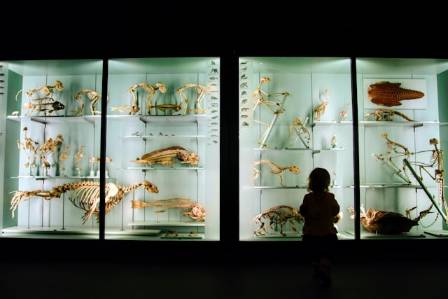
Approximately 66.8 million years ago, during the final days of the Cretaceous period, a diminutive, quail-sized bird met a rather unfortunate and untimely end. It was a time when an impending catastrophe, in the form of an asteroid, loomed large and led to the extinction of all non-avian dinosaurs. While this little bird was destined to vanish from the annals of history, its descendants endured, sowing the seeds of a remarkably diverse lineage of birds that continue to grace the modern skies.

What Sofa Depth Is Most Comfortable?
A sofa may look flawless in a store, yet feel uncomfortable the moment you try it at home. Often, the issue isn’t the color, fabric, or even firmness—it’s the depth. So, what seat depth provides the most comfort? For most people, a seat depth of 21 to 24 inches works well for everyday use, while deeper seats, ranging from 24 to 28 inches, are often better for lounging and stretching out.

Do You Know Why People Still Use Typewriters in Modern America
At first glance, typewriters might look like dusty antiques that belong in a museum rather than on a desk. But in a country overflowing with laptops, tablets, and smartphones, these clunky machines continue to surprise people with their staying power. Across the United States, typewriters are not just collector’s items—they remain dependable tools for offices, legal practices, and even individuals who want an alternative to the glowing screen.

Mini Robot: Uses, Costs, and Top Picks
Mini robots may be small in size, but they perform significant tasks in factories, classrooms, and homes. These compact machines, typically priced from $500 to $15,000, are designed to operate in areas where full-size robots cannot fit.
An Introduction to the Hoopoe: Nature's Crowned Aviator
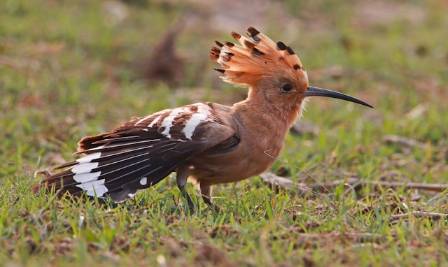
The Hoopoe (Upupa epops) is a remarkably vibrant bird found throughout Afro-Eurasia. It is most famous for its distinctive "crown" of feathers, an ornate crest that it can raise or lower at will.