Publisering
DESIGN EVOLUTION: 80 YEARS OF JAGUAR
Eighty years of Jaguar is a legacy stitched together with iconic design—each curve, grille, and silhouette balancing heritage and innovation. While the brand has evolved with tastes, tech, and regulations, the thread connecting its past to today’s models remains unbroken. This second chapter focuses on the 1960s and beyond, a pivotal era that didn’t just shape Jaguar’s design language but cemented it as an automotive art form. These decades turned Jaguar from a carmaker into a guardian of elegance, performance, and daring—qualities that still define its identity.
Mila
Signatur
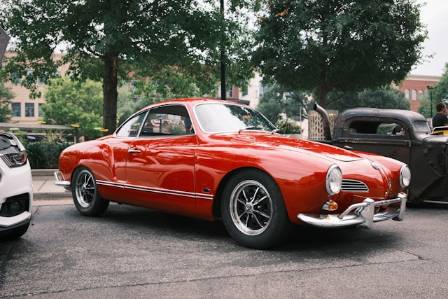
Eighty years of Jaguar is a legacy stitched together with iconic design—each curve, grille, and silhouette balancing heritage and innovation. While the brand has evolved with tastes, tech, and regulations, the thread connecting its past to today’s models remains unbroken. This second chapter focuses on the 1960s and beyond, a pivotal era that didn’t just shape Jaguar’s design language but cemented it as an automotive art form. These decades turned Jaguar from a carmaker into a guardian of elegance, performance, and daring—qualities that still define its identity.
The 1960s began with a revolution: the 1961 Jaguar E-Type. Unveiled at the Geneva Motor Show, it didn’t just impress—it redefined the sports car. Road & Track called it “the greatest crumpet collector known to man,” but its appeal went far beyond looks. Penned by aerodynamicist Malcolm Sayer (a former aircraft designer), the E-Type blended beauty and function: its impossibly long, sculpted bonnet housed a 3.8-liter straight-six engine (derived from the Le Mans-winning D-Type) that delivered 265hp and a 150mph top speed—rivaling exotics at a fraction of the cost. Its monocoque chassis reduced weight and boosted rigidity, while a 0.34 drag coefficient (remarkable for the era) came from teardrop fenders and a low-slung profile. The race-focused Lightweight E-Type, with an aluminum body shedding 250 pounds, was even more legendary: only 12 of 18 planned were built, and Jaguar’s 2014 “Missing Six” project finished the run with exact replicas. As former Jaguar Design Director Ian Callum noted, 1950s-60s Jaguar thrived on “excitement and purity”—and the E-Type embodied that. It remains the benchmark for sports cars, proving Jaguar could merge art and engineering seamlessly.
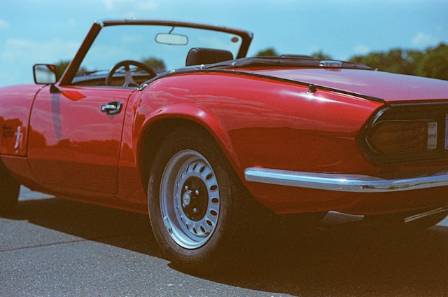
1966 brought a bittersweet chapter: the Jaguar XJ13. Conceived in secrecy to reclaim Le Mans glory (Jaguar had dominated the 1950s with the C-Type/D-Type), it was a mid-engined prototype that pushed boundaries. Sayer’s design was compact and feline, with a clear rear window showcasing its star feature: Jaguar’s first V12 engine (5.0-liter, smooth and powerful). Its aluminum-steel monocoque chassis and four-wheel disc brakes were built for endurance racing—but fate intervened. Le Mans changed regulations to favor production cars, and Jaguar’s financial pressures shelved the project; only one XJ13 was made. Its story nearly ended in 1971, when it was pulled from storage for an E-Type V12 marketing film at Silverstone: a magnesium wheel failed, sending it rolling. Test driver Norman Dewis switched off the engine mid-air (avoiding fire) and escaped unharmed. Rebuilt, the XJ13 now resides in the Jaguar Heritage Collection—a “greatest that never was” that still influences design: its mid-engined layout hinted at future possibilities, and its V12 powered Jaguar road cars for decades. It’s a reminder of Jaguar’s willingness to dream, even when plans falter.
1968 marked the end of an era with the Jaguar XJ6—the final design by founder Sir William Lyons. Lyons called it “the greatest Jaguar ever,” and it lived up to the hype: replacing Jaguar’s aging Mk II and S-Type saloons, it became his longest-lived creation (produced until 1992). Its design was a masterclass in restraint: a long, flowing bonnet (echoing sports car roots), a refined grille, and a sloped roofline that avoided 1960s boxiness. Inside, leather and wood veneer balanced luxury and functionality, while a 4.2-liter straight-six (later a 2.8-liter variant) delivered smooth power and a “magic carpet” ride—comfortable yet composed. The XJ6’s impact extended beyond sales: it inspired a 14-year-old Ian Callum, future Design Director, to write to Jaguar’s Vice Chairman Bill Heynes with his sketches. Heynes encouraged Callum to study art and engineering, noting his “styling flair”—a push that shaped Callum’s career. The XJ6 wasn’t just a saloon; it was a bridge between Lyons’ vision and Jaguar’s future, proving great design outlives trends.
1975 saw Jaguar face a daunting task: replacing the E-Type. Malcolm Sayer’s answer was the XJ-S, a car that divided opinion at first but became a long-standing icon (produced until 1996). The 1970s demanded change: stricter safety rules required larger bumpers, and the oil crisis prioritized efficiency. Sayer rose to it with aerodynamic innovation: “flying buttress” C-pillars (connecting roof to rear fenders for rigidity and sleekness) and a concave rear window reduced drag. Under the bonnet, it debuted a 3.6-liter straight-six (for efficiency) and an updated XJ13-derived V12 (285hp, 140mph top speed). Inside, leather and wood leaned into grand touring luxury—plush, ideal for long drives. Early critics called it a “GT trying to be a sports car,” but time softened opinions. A 1988 convertible, fuel-injected V12 updates, and subtle design tweaks made it a favorite. The XJ-S proved Jaguar could honor heritage while adapting: it wasn’t an E-Type copy, but a evolution that kept the brand relevant.
1996 brought renewal with the Jaguar XK8, a model that reignited the brand’s sports car spirit under Ford ownership. Designed by Geoff Lawson’s team, it wove heritage into modernity: E-Type-inspired long bonnet and fenders, XJ-S-influenced fastback profile—all feeling fresh. Its biggest leap was technical: Jaguar’s first V8 engine (4.0-liter, co-developed with Ford, 290hp) replaced aging V12s, offering lighter, more efficient power perfect for grand touring. Inside, it balanced nostalgia (wood accents, classic dashboard lines) and 1990s practicality (airbags, climate control). The XK8 became Jaguar’s fastest-selling sports car at the time, winning over fans with accessibility—like the E-Type, it offered performance and luxury without exotic price tags. It was a statement: even under new ownership, Jaguar’s design soul remained intact.
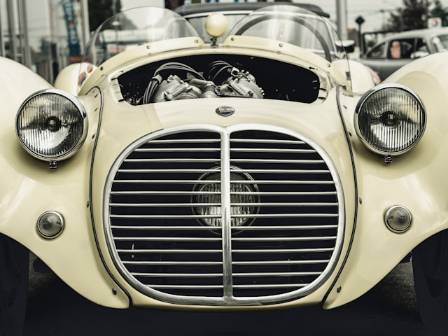
These five models—E-Type, XJ13, XJ6, XJ-S, XK8—are more than milestones; they’re the backbone of Jaguar’s design identity. Each solved a problem (replacing an icon, adapting to rules, reviving spirit) while staying true to the brand’s core: elegance, performance, and feline grace. Today, their influence shines in every Jaguar—from the F-Type’s curves to the XJ’s silhouette. Eighty years on, Jaguar’s design evolution isn’t just about changing styles—it’s about honoring the past while driving forward.
Andre saker du kanskje liker

Underground Colosseum Tour: A Fresh, Immersive Experience in Rome
The Colosseum in Rome has unveiled a new way to experience its rich history with the reimagined Underground Colosseum Tour. In collaboration with the Parco Archeologico del Colosseo (PArCo), this exciting new exhibition uses cutting-edge multimedia to transport visitors nearly 2,000 years back to Ancient Rome. The experience brings to life the passage of gladiators from the Ludus Magnus tunnel to the arena, allowing visitors to witness the spectacle like never before. The immersive tour features holographic gladiators, curated artifacts, and much more!
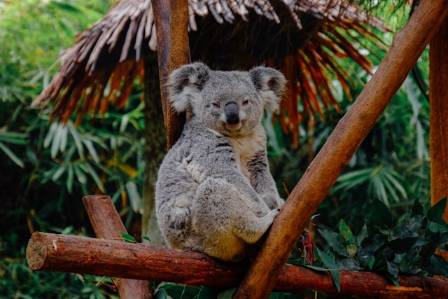
Delving into the Enigmatic World of Koalas: 10 Fascinating Insights
Embark on a journey to uncover the remarkable world of Koalas, their challenges, and what we can do to protect them.

The Most Adaptable Family Companion
Among the diverse world of canine companions, few breeds offer the perfect balance of energy, intelligence, and affection quite like the English Springer Spaniel. These medium-sized sporting dogs have transitioned seamlessly from skilled hunting partners to beloved family members, bringing their characteristic enthusiasm and loyalty into homes worldwide. Their versatile nature and willingness to please make them exceptional companions for various lifestyles and living situations.

Essential Realities of the Hermit Crab
Often marketed as "starter pets" or low-maintenance companions, hermit crabs are actually highly sophisticated creatures with specialized needs. Because they are sentient beings with complex biological requirements, the commercial pet trade frequently fails to provide the environment necessary for their survival. Understanding the true nature of these animals reveals why they belong in their natural habitats rather than in small plastic tanks.

The Transformation of T20 Cricket
Since its debut, the Twenty 20 (T20) format has served as both a disruptor and an innovator within the world of cricket. When T20 cricket was introduced, it offered a faster-paced alternative, drawing fans who found longer formats less engaging. It also sought acceptance in countries where traditional "5-day" Test matches were still viewed as the pinnacle of the sport. However, despite its groundbreaking start, the evolution of T20 cricket has been relatively gradual.

15 Stunning Birds of the World: Nature’s Beautiful Masterpieces
Welcome to a visual tour of the bird world. Birds fascinate us with their bright colors, detailed patterns, and graceful movements. Each species adds a unique touch to the natural landscapes they live in. From the showy displays of peacocks to the calm elegance of flamingos, these creatures fill us with wonder and appreciation.
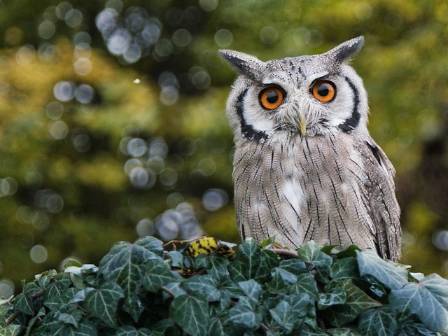
4 Surprising Factors Of Owls
Embark on a mesmerizing journey as we unravel the enigmatic realm of owls, creatures shrouded in mystery and adorned with captivating allure. From their ancient origins etched in cave paintings to their symbolic presence on coins and vases, owls have mesmerized humanity for centuries. Let us delve into the realm of these formidable predators and explore the fascinating facts that set them apart in the avian kingdom.

Myths and Realities of Our Lunar Companion
The Moon is a constant presence in our sky, yet much of what we think we know about it is shrouded in misconception. From its violent birth to its influence on earthly biology, our celestial neighbor is far more complex than a simple "boring" rock. By examining the science and history of the Moon, we can move past science-fiction tropes and appreciate it as a distinct, fascinating world.

Dazzling Avian Wonders: A Guide to the World’s Most Colorful Birds
It is well-known that the avian world is a tapestry of diverse forms, sizes, and hues. While some species prefer understated plumage, others display only minor splashes of pigment. However, a select group of birds serves as nature’s true spectacles—creatures so intensely colored they appear to have emerged directly from a prism. From the painted bunting of the United States to exotic species across the globe, these feathered marvels demonstrate that nature is an unparalleled artist.
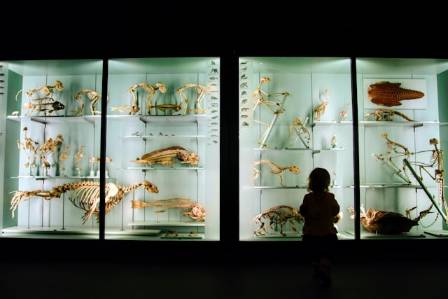
The Oldest Modern Bird: Unveiling the Mystery of Wonderchicken
Approximately 66.8 million years ago, during the final days of the Cretaceous period, a diminutive, quail-sized bird met a rather unfortunate and untimely end. It was a time when an impending catastrophe, in the form of an asteroid, loomed large and led to the extinction of all non-avian dinosaurs. While this little bird was destined to vanish from the annals of history, its descendants endured, sowing the seeds of a remarkably diverse lineage of birds that continue to grace the modern skies.